Cancer Screening in Malaysia: Types of Tests, When to Screen & Why It Matters
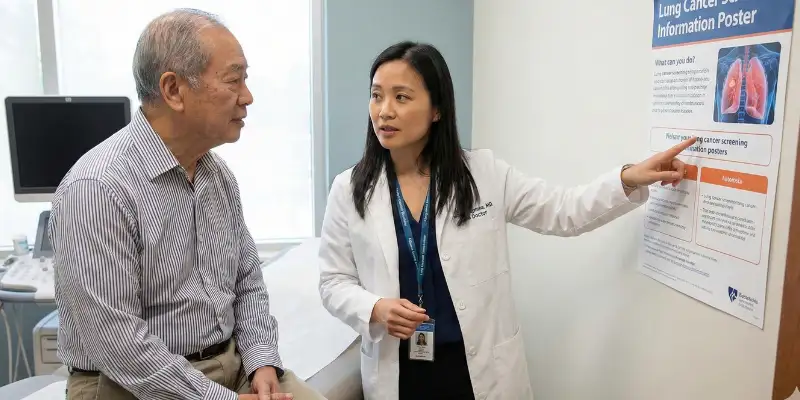
Cancer screening refers to medical tests performed to detect cancer in individuals who do not yet have symptoms. Regular screening plays a critical role in identifying cancer at an early stage, when treatment is often more effective and outcomes are generally better.
By taking a proactive approach to cancer screening, individuals can protect their health through early detection and timely medical intervention.
A range of cancer screening tests is available in Malaysia, for example at Prince Court Medical Centre, for the early detection of common cancers. Your doctor will recommend the most appropriate screening method based on your age, medical history, lifestyle, and individual risk factors.
Breast Cancer Screening
Mammography
A mammogram is a specialised X-ray of the breast used to detect early signs of breast cancer. It is particularly effective in identifying small lumps or abnormalities that may not be felt during a physical examination.
Digital mammography uses a lower dose of radiation and requires less breast compression. It also produces clearer, more detailed images than conventional mammograms, improving diagnostic accuracy.
Who Should Go for a Mammogram?
For women aged 40–49 years old, you should speak with your doctor about when to start screening and how often it should be done.
For women aged 50–74 years old with average risk, a mammogram is recommended once every two years.
Cervical Cancer Screening
Pap Test
The Pap smear (Pap test) is a screening procedure used to detect abnormal cell changes in the cervix, which is the lower part of the uterus that opens into the vagina.
During the procedure, the doctor examines the vagina and cervix and collects cell samples from the cervix. These samples are sent to a laboratory for analysis to identify pre-cancerous changes early, allowing timely treatment before cervical cancer develops.
HPV Test
The HPV test detects the presence of the human papillomavirus (HPV), a common virus associated with an increased risk of cervical cancer. This test may be performed on its own or together with a Pap test.
During the procedure, a speculum is gently inserted into the vagina to allow access to the cervix. A small brush or spatula is used to collect cervical cells, which are then sent to a laboratory for testing.
Who Should Undergo Pap and HPV Testing?
For women aged 21 to 29 years, pap testing is recommended starting from age 21 or three years after the onset of sexual activity. Women with two consecutive normal Pap test results may continue screening every three years.
For women aged 30 to 65 years, screening options include a Pap test, an HPV test, or a combination of both. Women with a negative HPV result may continue screening at five-year intervals. The most suitable approach should be discussed with your doctor based on individual risk factors.
Colorectal Cancer Screening
Faecal Occult Blood Test (FOBT)
The FOBT is a laboratory test used to detect hidden blood in the stool that is not visible to the naked eye. Stool samples are collected and sent to a laboratory for analysis. Adults aged 50 years and above are encouraged to undergo FOBT once a year as part of routine colorectal cancer screening.
Flexible Sigmoidoscopy
This procedure uses a thin, flexible tube inserted into the rectum to examine the rectum and lower portion of the colon. It allows the doctor to identify polyps or abnormal growths that may be cancerous.
Colonoscopy
Colonoscopy provides a comprehensive examination of the entire colon and rectum using a long, flexible tube with a camera at its tip. The device is inserted through the anus to allow detailed visualisation of the large bowel. During the procedure, polyps can be detected and removed at the same time, significantly reducing the risk of colorectal cancer.
Lung Cancer Screening
Low-Dose Computed Tomography (LDCT)
LDCT is a specialised imaging test that uses low levels of radiation to produce detailed images of the lungs. During the scan, you lie on a table while an X-ray machine captures a series of images for your doctor to review.
LDCT is currently the preferred screening method for the early detection of lung cancer in individuals at increased risk.
How Do Doctors Diagnose Cancer?
If cancer is suspected, your doctor will carry out a series of tests to confirm the diagnosis. This usually begins with a discussion of your medical history and symptoms, followed by one or more of the examinations below.
Physical Examination
Your doctor will check for unusual signs such as lumps, swelling, or changes in skin colour. For example:
Laboratory Tests
These may include blood tests, urine tests, or tumour marker tests. Abnormal levels of certain substances may suggest the presence of cancer.
Common tumour markers include:
CA 125: Commonly associated with ovarian cancer; may also be raised in uterine, cervical, pancreatic, liver, breast, and lung cancers
CA 19-9: Often used in detecting colorectal, stomach, and bile duct cancers
CA 15-3 and CA 27-29: Commonly used in monitoring advanced breast cancer
Carcinoembryonic antigen (CEA): Associated with colorectal cancer
Prostate-specific antigen (PSA): Used to screen for prostate cancer
Alpha-fetoprotein (AFP): Associated with liver, ovarian, and testicular cancers
Tumour markers are used together with other tests and are not relied upon alone for diagnosis.
Biopsy
A biopsy involves removing a small tissue sample from the suspected area for microscopic examination. This may be done via:
Needle biopsy: A needle is used to collect tissue or fluid, commonly from the breast, prostate, liver, or bone marrow.
Endoscopic biopsy: Tissue is collected using a thin tube passed through the mouth or anus, such as during a colonoscopy or bronchoscopy.
Surgical biopsy: A tissue sample is taken during surgery, for example from a breast lump or lymph node.
Imaging tests
Imaging tests provide detailed internal images to detect tumours and abnormalities, including:
X-ray, ultrasound, CT, MRI, PET, and SPECT scans.
X-ray uses low-dose radiation to capture internal images.
Ultrasound uses sound waves to generate real-time images of organs and tissues.
Computed tomography (CT) scans provide detailed cross-sectional images with improved image quality and reduced radiation exposure.
Magnetic resonance imaging (MRI) scans use magnetic fields and radio waves to produce detailed images of soft tissues without radiation exposure.
Positron emission tomography (PET) scans evaluate metabolic activity and are commonly used to assess cancer spread and treatment response.
Single photon emission computed tomography (SPECT) scans assess organ function and, when combined with CT, provide precise anatomical localisation.
When to Seek Medical Advice for Cancer Screening at Prince Court Medical Centre

Take a proactive approach to your health by discussing appropriate cancer screening with your doctor based on your age and risk profile. Regular cancer screening is an essential part of preventive healthcare.
Get in touch with Prince Court Medical Centre to know more about cancer screening and book a consultation today.