Unexplained Lumps and Swelling: When Could It Be Sarcoma or Other Cancers?
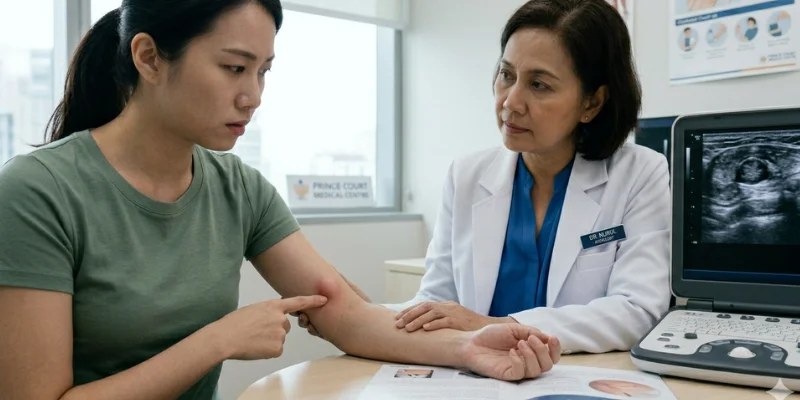
You have just noticed a lump under your skin or an area of swelling that wasn’t there before. Your mind might jump to the worst possibility. That’s a normal reaction. But here’s what you need to know first:
Most lumps are not cancer.
Many are harmless: a cyst, a lipoma (a soft fatty lump), or simply a sign that your body is fighting a minor infection.
Still, a small number of lumps deserve a closer look - not to scare you, but because early checking brings peace of mind. And in the case that something is wrong, early action changes everything.
Let’s walk through this calmly, step by step.
Is a Lump Always Cancer?
No. In fact, most lumps are benign (non-cancerous). It may be caused by conditions such as:
So when should you pay closer attention? Not with fear, but with thoughtful awareness. Consider seeing a doctor if a lump:
A lump that is increasing in size
A firm or hard lump
A lump that persists for more than 2 to 4 weeks
A lump that is fixed (does not move easily under the skin)
Associated symptoms such as unexplained swelling or pain
Think of this as a simple checklist, not a reason to panic.
What Are Other Common Causes of Lumps and Swelling?
It is indeed common to develop lumps under the skin or areas of unexplained swelling whereby many of which are benign.
Besides the ones mentioned above, other common causes include:
Skin tags
Cellulitis
Boils and carbuncles
Skin infections
Skin abscesses
In the vast majority of cases, these resolve or remain harmless. The doctor can tell the difference quickly
When Could a Lump Be Cancerous?
Again, most lumps are not cancer. But a small number of lumps, including sarcoma or other cancers, can start this way.
Ask yourself:
Is the lump increasing in size over the weeks?
Does it feel hard and fixed/stuck in place?
Has it lasted more than two weeks?
Is there unexplained swelling, skin changes (redness, ulceration, bleeding), or pain?
Is the lump in a specific area like the breast or testicles? (Note: These always deserve prompt review).
If you answer “yes” to any of the above, make an appointment. Not because it’s likely cancer, but because ruling it out is the fastest way to be real calm.
Although most lumps are benign, early evaluation helps determine whether further tests, such as ultrasound, MRI, or a biopsy for a lump, are needed to rule out conditions such as sarcoma or other malignancy after being assessed by the clinician.
What Is Sarcoma?
Sarcoma is a group of rare cancers. Unlike common cancers (which start in the organs like breast, lung, colon), sarcoma begins in the body’s connective tissue:
Muscles
Fat
Blood vessels
Nerves
Tendons
Joint linings
Bones
Thus, there are many different types of sarcoma, and they can occur in various parts of the body. Treatment depends on factors such as the type, location, and stage of the cancer.
Because sarcoma is uncommon, most lumps are not sarcoma. But when a soft tissue lump grows persistently, doctor will want to rule it out, thoroughly
Sarcoma Symptoms: What to Watch For
Sarcoma symptoms can vary depending on whether the cancer affects soft tissue or bone.
Soft tissue sarcoma often presents as a painless lump under the skin that gradually increases in size. Because it may not cause discomfort initially, it can sometimes be overlooked.
Bone sarcoma may cause persistent bone pain, swelling, or, in some cases, fractures occurring with minimal or no injury.
Other possible signs of sarcoma include:
A growing soft tissue lump
Persistent unexplained swelling
Abdominal discomfort (if located internally)
Unexplained weight loss
While these symptoms do not always indicate cancer, it is important to seek medical evaluation for any new, persistent, or unusual changes.
How Are Lumps and Swelling Diagnosed?
Lumps and swelling are typically evaluated through a combination of clinical assessment and imaging tests.
A physical examination is usually the first step, where a healthcare provider assesses the size, consistency, and mobility of the lump. This may be followed by imaging tests such as:
Ultrasound to assess the nature of a lump under the skin.
MRI for detailed evaluation of a soft tissue mass.
Biopsy if appears suspicious on clinical examination or imaging. This involves taking a small tissue sample to determine whether the lump is benign or cancerous and to guide appropriate treatment.
When to See an Oncologist at Prince Court Medical Centre
You don’t need to live with “what if”.
If you notice any persistent or unexplained lump or swelling, reaching out is the kindest thing you can do for yourself.
At Prince Court Medical Centre, our oncologists specialise in evaluating exactly this concern through:
Advanced imaging (Ultrasound, MRI or PET-CT).
Clear, compassionate consultation.
Biopsy if indicated.
Here’s your calm, clear next step: Get in touch with us today to book an appointment and take the next step in your care journey.
If your symptoms are concerning or rapidly changing, seek medical attention promptly for further evaluation, sooner is always better.
Reviewed by Dr Lavannia Rajaratenam